Building an AI System That Works for You
Chuck Blake // ERA // March 2026
Meet Gomez.
My AI chief of staff. Lives on a Mac mini. Has opinions.
- Built on OpenClaw — an open source local AI agent platform
- Connected to Telegram, my calendar, my code, my tasks
- Painful to build. It did not go well at first.
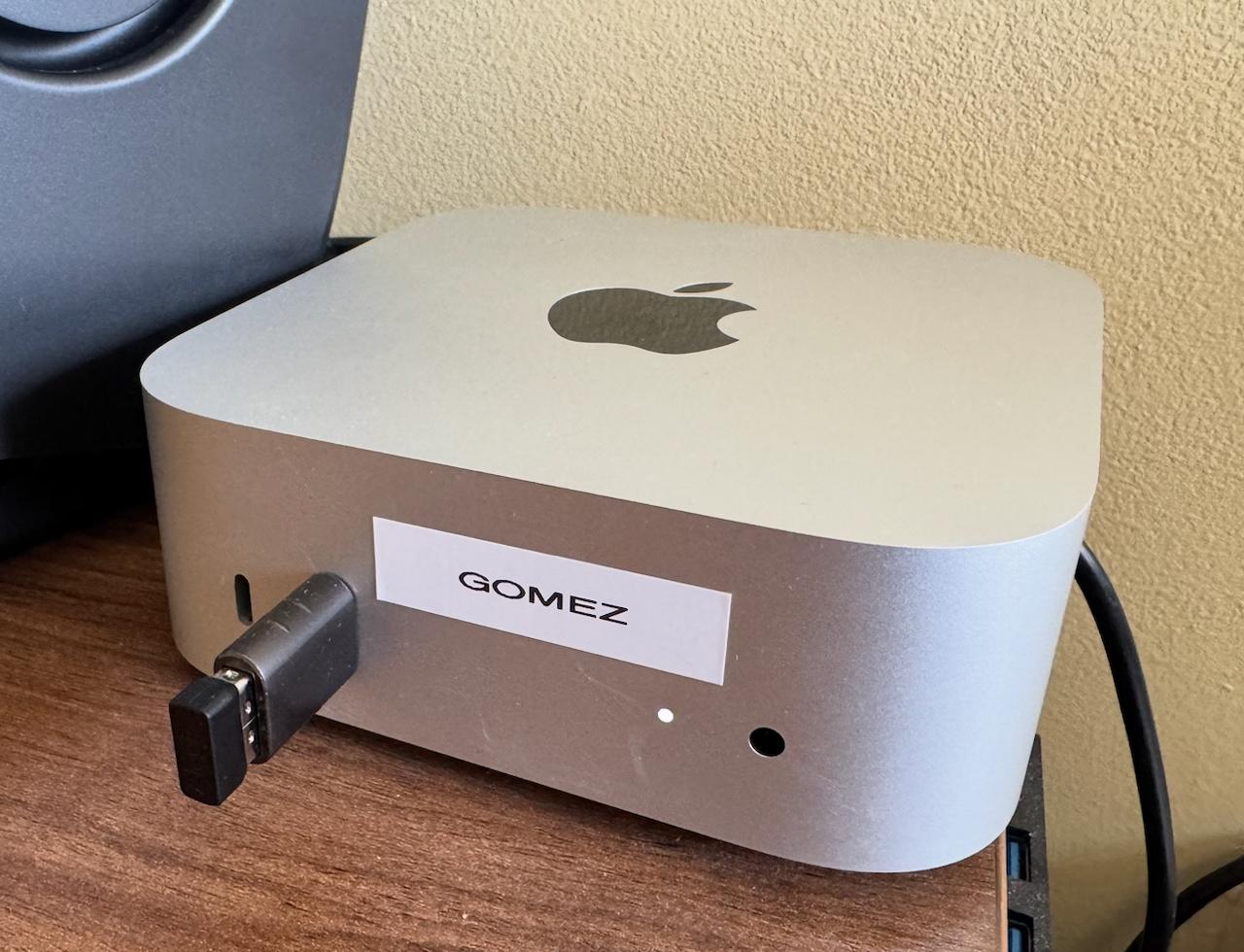
Gomez
Building a System, Not Just Using a Tool
The model is a starting point. What you add is what makes it yours.
- You install OpenClaw and you have a model — a commodity
- Then you give it a soul: identity, personality, preferences, knowledge
- Every customization turns a generic harness into something uniquely yours
The model doesn't know who you are. You have to tell it. That's the work — and that's the moat.
Three Ways to Build That System
Not a framework. Just what's been working.
- Memory
- Context
- Principles
1. Memory
Give your AI a memory it can rely on
- Identity, errors, long-term memory, daily log
- Semantic search via local vector DB (Mem0 + Qdrant)
- Key insight: this is YOUR thinking, not the model's
The agent wakes up fresh every session. The files are the memory.
How Memory Works
One portable brain
EVERY SESSION
Daily Log
Raw notes — what happened, what was decided
AS IT HAPPENS
errors.md
Mistakes logged in real time. Don't repeat.
STABLE
IDENTITY.md
Who I am, how I communicate, hard rules
→
WEEKLY DISTILLATION
MEMORY.md
Curated long-term memory — decisions, patterns, preferences
ONGOING
Mem0 + Qdrant
Semantic vector search — finds relevant context by meaning
↓
EVERY BOOT
Agent loads context
Identity → errors → long-term memory → today's log → semantic search
Wakes up knowing who it is and what matters
Example: Memory
📌 SECTION
Every session, Gomez queries his local vector DB with the
session topic. These are memories retrieved before any
conversation started.
Every session, Gomez queries his local vector DB with the
session topic. These are memories retrieved before any
conversation started.
⚙️ COMMAND
python3 mem0_session_start.py "ERA presentation"
python3 mem0_session_start.py "ERA presentation"
📤 OUTPUT
• Giving a presentation this week for ERA about OpenClaw
• Found value in reflecting on the work and what transfers
• Stores presentation files in master branch of chuckblake.github.io
• Hates Slack
• Uses GitHub
• Never builds PPTX — always edits HTML directly for presentations
• Giving a presentation this week for ERA about OpenClaw
• Found value in reflecting on the work and what transfers
• Stores presentation files in master branch of chuckblake.github.io
• Hates Slack
• Uses GitHub
• Never builds PPTX — always edits HTML directly for presentations
2. Context
Organize your personal context into a searchable vault
- Curated context (your vault, your errors, your preferences) gets your output
- Build a personal knowledge base — notes, highlights, decisions
- Your context is the moat.
What's In The Vault
An Obsidian knowledge base — personal, structured, searchable
📁 People
Contacts, bios, relationship notes, birthdays
📁 Journal
Daily logs — what happened, what was decided
📁 Decisions
Architectural and product decisions with rationale
📁 Health
Sleep, exercise, mood — logged daily
📁 Meetings
Notes, action items, follow-ups
📁 Knowledge
Ideas, research, reading notes
📁 Projects
GetMusic, SonicSift, IndieCrates — context + status
📁 Readwise
Highlights from books, articles, podcasts
🔍
QMD
— the entire vault is indexed and vectorized. Hybrid search: keyword + semantic. Ask a question, get the right note.
bash qmd-search.sh query "What is Murat's degree in?"
This is not a notes app. It is the context layer that makes every AI interaction personal.
Example: Context
📌 SECTION
Personal knowledge vault — looking up a contact in
chuck-vault. Same question, every time: if I onboarded
a new assistant tomorrow, what would they need to know?
That's what goes in here.
Personal knowledge vault — looking up a contact in
chuck-vault. Same question, every time: if I onboarded
a new assistant tomorrow, what would they need to know?
That's what goes in here.
⚙️ COMMAND
search chuck-vault → "What is Murat's degree in?"
search chuck-vault → "What is Murat's degree in?"
📤 OUTPUT
MS Computer Science — Neural Networks + Machine Learning.
ERA co-founder. 400+ investments since 2011. $10B+ portfolio.
Chuck is presenting to him on March 27.
MS Computer Science — Neural Networks + Machine Learning.
ERA co-founder. 400+ investments since 2011. $10B+ portfolio.
Chuck is presenting to him on March 27.
3. Principles
Scale your taste, not your attention
- Most people direct every AI interaction individually
- Principles embed your judgment into the system itself
- You stop being in every loop — your standards are
The bottleneck used to be execution. Now it is judgment. That is the right problem to have.
What A Principle Looks Like In The Repo
CLAUDE.md — committed to git, read by the agent every session
THE PRINCIPLE (in CLAUDE.md)
# Architecture
API-first: any functionality that exists
in the UI must also exist in the API.
No UI-only features.
All new endpoints require RSpec tests
before merge.
API-first: any functionality that exists
in the UI must also exist in the API.
No UI-only features.
All new endpoints require RSpec tests
before merge.
CHUCK ASKS: "Add bulk tag filtering to search"
Agent's plan:
Step 1: Add
Step 2: Write RSpec tests
Step 3: Build UI against the API
Chuck never mentioned the API.
The principle did.
Step 1: Add
GET /api/v1/tags/filterStep 2: Write RSpec tests
Step 3: Build UI against the API
Chuck never mentioned the API.
The principle did.
Write it once. Commit it. Every agent that touches the repo inherits your judgment.
The Model Is Replaceable. The System You Build Around It Is Yours.
The model is a commodity. What you build around it isn't.
- Everyone has access to the same AI — GPT, Claude, whatever comes next
- Nobody else has your memory, your context, your judgment in the system
- That gap compounds. Every skill you build, every correction you log, every principle you embed — it widens.
These ideas aren't OpenClaw-specific. Build your memory in files. Build your context in a vault. Build your skills as text. Any platform
that reads them inherits your system.
chuckblake.com/presentations/getting-ai-to-work-for-you/
Find Me
- Website: chuckblake.com
- X: @chuckblake
- LinkedIn: /in/chuckblake
- Slides: chuckblake.com/presentations/getting-ai-to-work-for-you/